
Chatbots and conversational AI
We build assistants connected to how you work: they check your diary, write to your CRM and confirm the booking. Not a button tree with a new name.
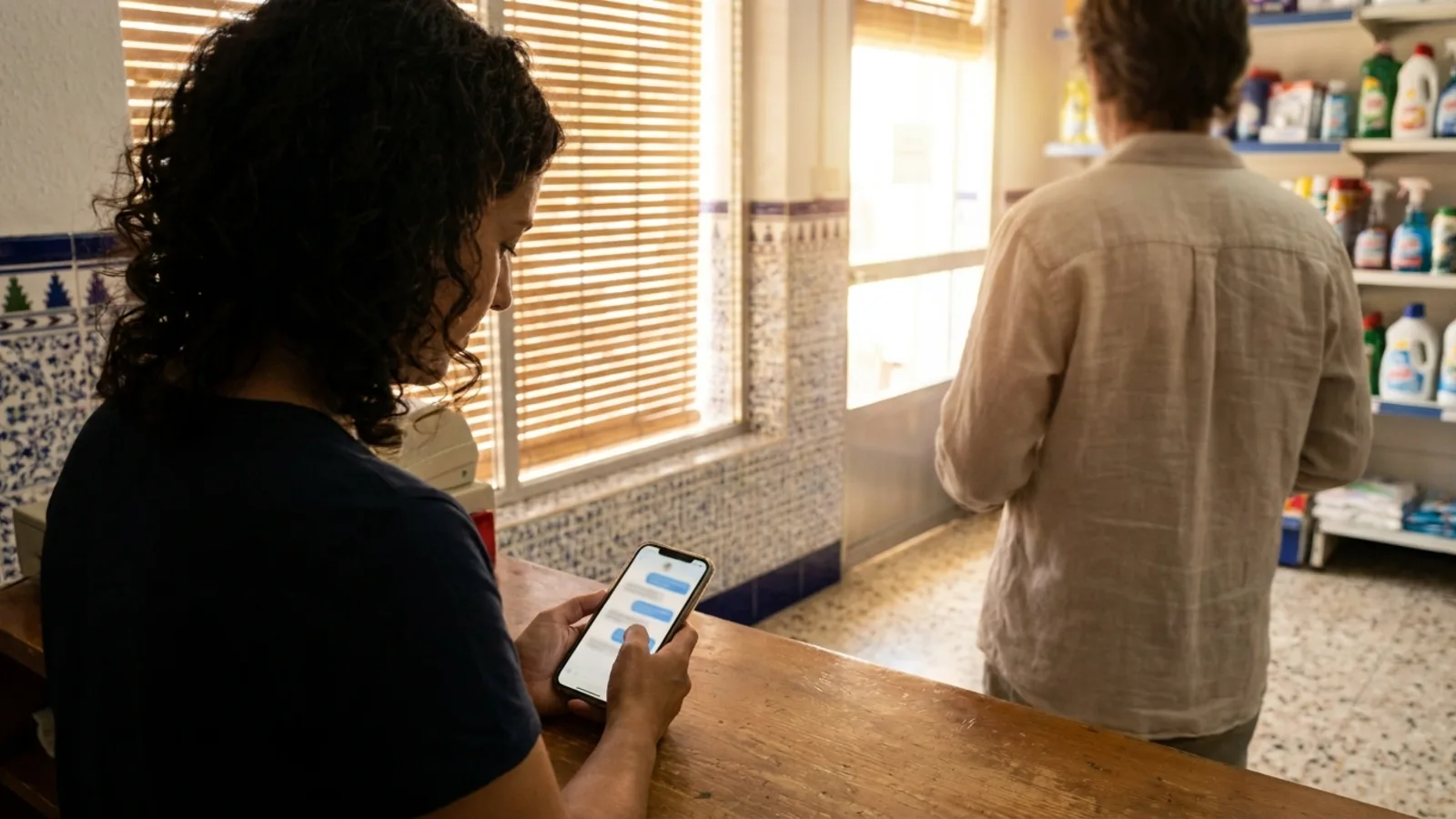
A customer messages you on WhatsApp at eleven on a Saturday night: they want to move Tuesday's appointment. If nobody is there, they'll wait until Monday or go to the next name on the list. If what's there is a button menu, that won't solve it either: they'll end up typing "speak to a person". What we build is the other thing. An assistant that understands what it's being asked, checks your real diary and makes the change there and then.
"Press 1 for appointments": why the bot you already know doesn't solve anything
A menu bot is a switchboard in writing. It gives you three options, you pick one and it gives you three more. As long as your question is on the list, fine. The moment it strays an inch ("I've got an appointment on Tuesday but a trip has come up, can you move it to next week?"), the tree runs out and "sorry, I didn't understand" appears. A conversational assistant doesn't work through menus: it reads the whole sentence, picks out what matters (which appointment, what they want to do, when suits them) and acts on your system. For the customer, the difference is they don't have to learn how to talk to your bot. They write the way they'd write to someone they know.
Why WhatsApp and not a chat on your website?
Because your customer is already there and doesn't have to install or remember anything. In 2025, 94.7% of Spain's population used instant messaging, against an EU average of 82.3%. A website chat only exists while the tab is open: if the customer closes it, the conversation is lost and the reply ends up in an email they may never open. On WhatsApp the thread stays put, with its history, and the notification lands in their pocket. When a person steps in to carry on, they can see everything said before. If your case calls for the website, Instagram or Telegram, it's built the same way: the door changes, not what's behind it.
Source: Eurostat, internet use by individuals (instant messaging, 2025 data)
An assistant that isn't connected to anything can only answer
The visible part of a chatbot is the conversation. The part that decides whether it's any use is underneath: what it's plugged into. If it can't see your diary, it doesn't know which slots are left, and all it can promise is that someone will call. If it doesn't write to your CRM, what was said stays on a phone and nobody finds out. We build it the other way round: first we define what it must be able to look up and what it must be able to write, and the conversation sits on top of that. It's what we do in-house. The form on this website doesn't send an email: it creates a record in our CRM with what you've told us, so when we call you we already have it in front of us.
Where the line sits: the repetitive stuff for the bot, the relationship for you
An assistant is good at what repeats and needs no judgement: opening hours, where you are, whether there's a slot on Thursday, how an order is going, moving an appointment, taking the details of someone who writes at three in the morning. As soon as the conversation needs judgement (a complaint, an angry customer, a sale closed by talking), it summarises what's been said and hands the thread to a person, without asking again what's already been asked. And some conversations aren't automated at all. If someone starts describing symptoms, that's health data, a special category under the GDPR, and the Spanish Data Protection Agency (AEPD) asks for extra care with it. There, the assistant books the appointment and nothing more.
The bot has to say it's a bot
It isn't a setting or a matter of style. The EU AI Act requires an automated system to identify itself as such to the person it's talking to. We build it that way as standard, and it pays off: people who know an assistant is answering ask more directly and don't mind being told a colleague will handle that better. Deception is spotted quickly and takes trust down with it. Two more things come as given: being able to ask for a person at any time, and keeping only what's needed, not the whole conversation just in case.
When it isn't worth building
If four customers message you a week and you answer them on the spot, this gives you work without taking any away. If every enquiry is different and gets resolved by talking, the assistant gets in the way more than it helps. If what's jammed is the phone and not WhatsApp, what you need is a voice agent. If what eats your day is internal work nobody sees from outside, that's an AI agent. And if your diary lives in a notebook, first there has to be something to read from. Tell us about your case and we'll tell you whether we can do it, how we'd approach it and what it would cost. If it isn't for us, we'll tell you that too.
Frequently asked questions
- Can people tell it's a bot?
- Yes, and on purpose: it introduces itself as an automated system from the first message, because the law requires it. What they can't tell is a menu. There are no numbers to press and no keyword to guess; the customer writes the way they always do. And when they ask to speak to someone, it passes to a person with the whole conversation behind it.
- What if it doesn't know something or gets it wrong?
- It's built to admit it rather than fill the gap. When the question goes beyond what it can look up, it says so and hands the thread to a person with everything said so far. Before it goes live we test it with real conversations from your business, including the awkward ones: those that wander off topic and those that ask three things at once.
- Can I jump into a conversation halfway through?
- Yes, and you should. The assistant handles it and you see the thread; as soon as you start typing, it steps aside and doesn't return to that conversation unless you tell it to. You can also switch it off during office hours and leave it on only at night and at weekends, which is usually when it's needed most.
- How much does a chatbot like this cost?
- It depends on how many systems it has to connect to and whether those systems let it in: reading a diary that already lives in the cloud is not the same as pulling free slots out of a closed program. That's why we don't publish prices on the website. Tell us what it would need to handle and we'll tell you what yours would cost.
How we work
01
Understand
We sit down with you and look at how you really work. We come away knowing what makes sense to build and, above all, what doesn't.
02
Build
We build it on the tools you already use and show it to you working, not in a slide deck.
03
Stay with you
We measure, we adjust and you can always reach us. Software isn't something you install and forget.