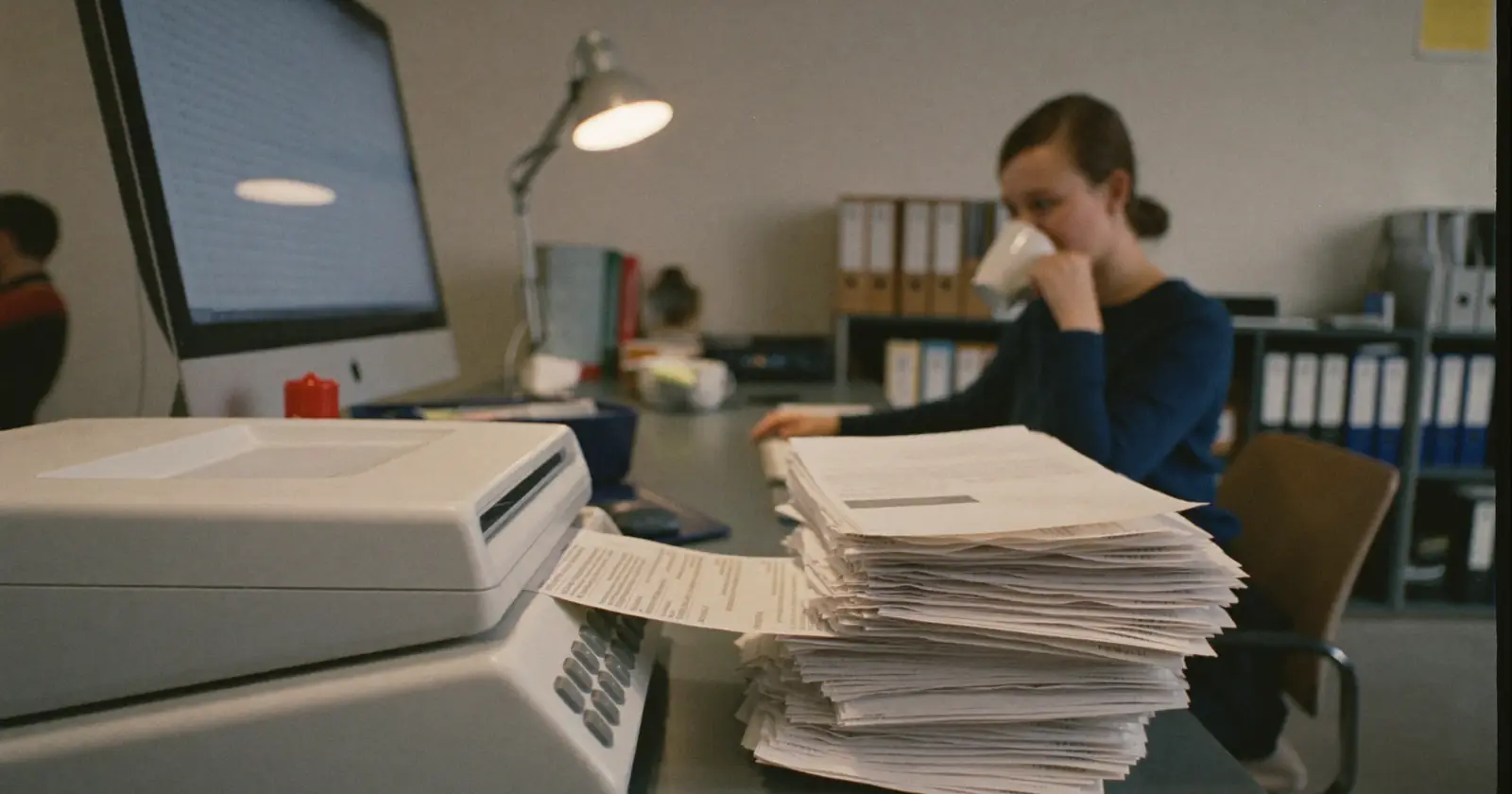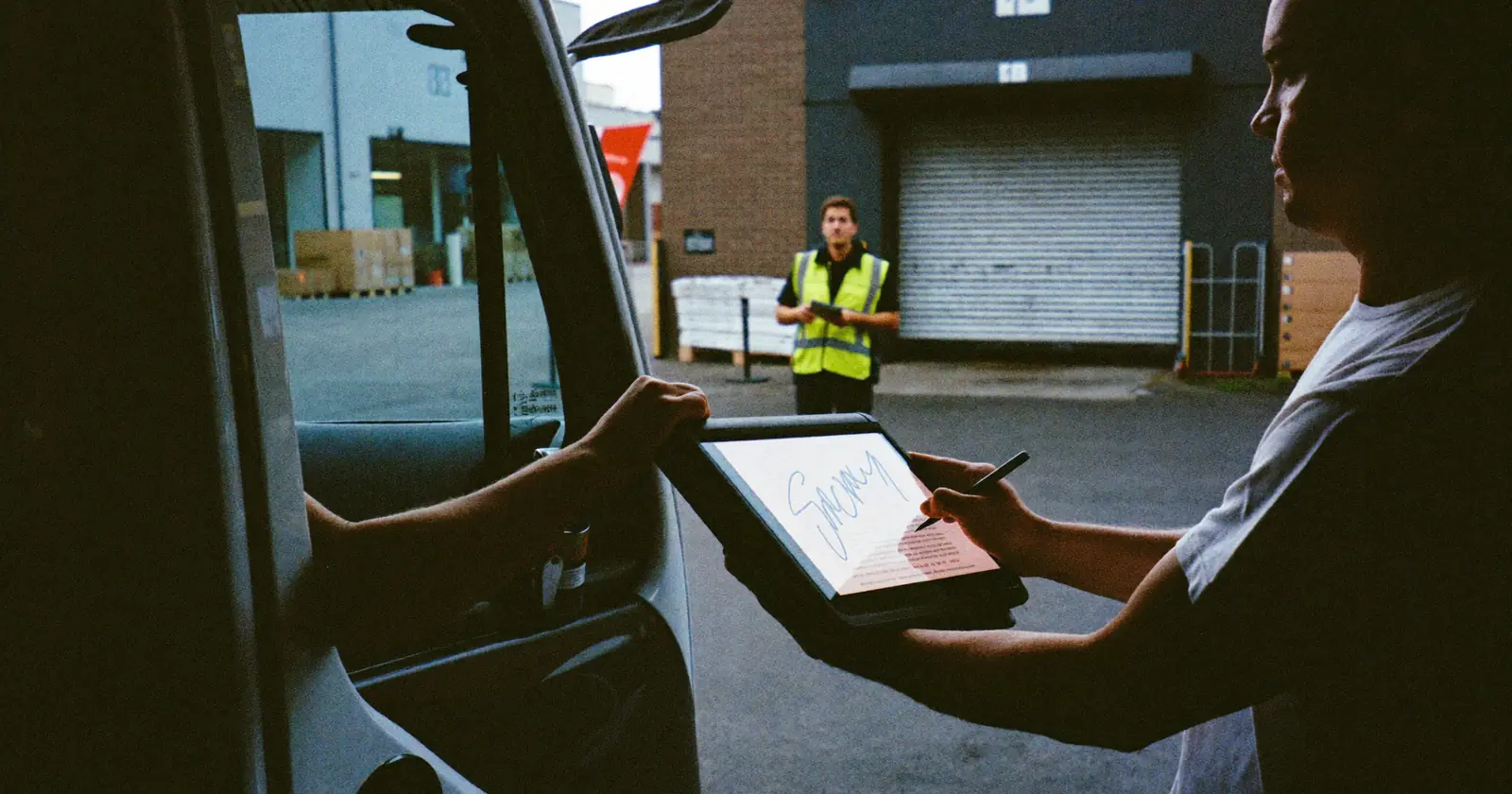
The driver delivers, gets the paper delivery note signed, folds it and puts it in his trouser pocket. He gets back to the depot at seven. The delivery note turns up on Thursday, crumpled, when nobody remembers who it was for.
Multiply that by six vans and four deliveries each.
There is a lot of transport in the Campo de Gibraltar: the port of Algeciras moves cargo all day, the industrial estates of Palmones, Guadarranque and El Bujeo concentrate warehouses with their own deliveries, and then there is all the last-mile delivery between Algeciras, La Línea and San Roque. And the paperwork is the same in all of them: the problem is not driving, it is what happens to the paper after driving.
Where the time really goes
If you run a small fleet, this will sound familiar.
The signed delivery note takes days to reach the office. And until it arrives, nothing is invoiced. Every day of delay on paper is a day of delay in getting paid.
Nobody knows whether it was delivered until someone asks. The customer calls the office, the office calls the driver, the driver is unloading and doesn't answer. Three calls to find out something that had already happened.
Work reports are filled in from memory. At the end of the month, someone reconstructs what each van did by trying to remember. And that is where billable hours are lost, always in the customer's favour and against yours.
Incidents are told over the phone and forgotten. “The man at the warehouse wasn't there”, “there were roadworks and we couldn't get in”. If it isn't written down, the next time it happens again.
What can be taken out of the way
None of this requires changing the vans or putting computers in the cab. It is done with the phone the driver already carries.
The delivery note is signed on the phone and arrives by itself. The driver swipes a finger, takes a photo of the goods if needed, and the document is in the office before he starts the engine again. It is invoiced the same day.
The customer gets the notice without anyone calling. One message when it leaves and another when it is delivered. The three calls are gone.
The report fills itself in from what has already happened. If the system knows what time each item was delivered, the day's report doesn't have to be reconstructed: it is already done.
The incident is recorded where it happens. The driver sends a WhatsApp voice note saying what happened, and it is written down, classified and linked to that customer and that address. Next time, the warning comes up before setting out.
That last one is the one people like most when they see it working: the driver doesn't fill in forms, he talks. And what he says ends up organised in the customer's record.
What still needs a person
Let's be clear, because in transport there is a lot of overpromising:
The day's route is still planned by whoever plans it. There are too many things that only someone with years in the job knows: which street in La Línea is closed on market Tuesdays, which warehouse you have to reach before nine, which customer accepts goods being left at reception.
A serious incident is taken by someone on the phone. If there is an accident or a rejected load, no automation is any use there.
The difficult customer too. When someone calls angry, a person answers.
And one thing specific to the port
If you work with cargo that comes in or goes out through Algeciras, there is one more layer: customs documentation. There it is not that time gets lost, it is that it gets lost in bulk: the same piece of data keyed in three times in three different places.
We talk about that separately in AI for logistics and customs at the port of Algeciras and in freight forwarders, because it is a different world from delivery.
Where to start
With the delivery note, almost always. It is what shows fastest: it goes from taking days to being in the office the same day, and that brings forward the invoicing of the whole fleet.
If you want us to look at your case, tell us about it. And if you would rather first see what kind of things we build, they are in custom applications and in systems integration, which is what is needed when you already have a management program and don't want to throw it away.
Frequently asked questions
My drivers aren't tech people. Will they know how to use it?
If something has to be taught, it is badly designed. What works in a fleet is: open WhatsApp, send a voice note or a photo, sign with a finger. No apps with menus. The test is whether the oldest driver uses it without asking.
Do we have to change the management program we already have?
No. It almost always connects to the one that is already there. Throwing away a program that works to put in an off-the-shelf one usually costs more and takes longer.
And if we work with subcontractors?
It is one of the cases where it shows most, because with someone else's fleet the paper arrives even later. The digital delivery note works the same with your own driver as with a subcontracted one: all it needs is a phone.
Does it work for last-mile delivery and for port cargo at the same time?
The delivery note and the notices, yes, the same in both. Customs is something else and goes separately.

Xora IntelligenceAI consultancy and custom software in Los Barrios (Cádiz). We write about what we build for businesses in the province. If you have a question about your case, write to us.