
Social media management
We handle the content from start to finish and every month we tell you what worked and what didn't, with numbers and no hot air.
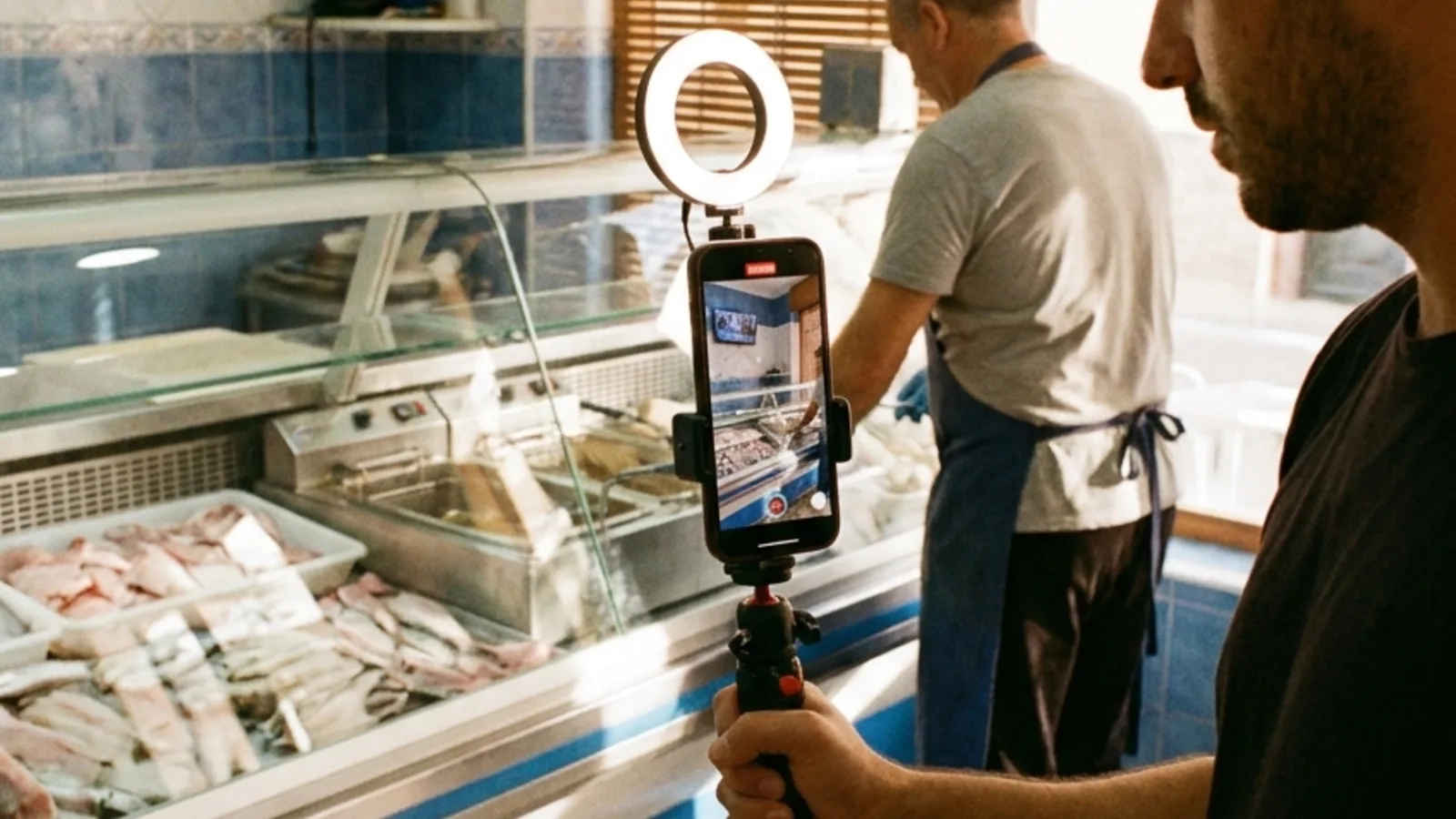
You post when you remember, nearly always at night and in a rush. Some weeks something goes out, others nothing, and if someone asks whether it brings you customers, all you know is how many followers you have. This service is the opposite: a plan for what gets posted, content about your business rather than whatever's trending, and a monthly report on what worked and what didn't, even when it's been a slow month.
Followers don't tell you whether you're selling
Follower count is the easiest figure to show and the one that decides least. It can be pushed up with giveaways and with people who'll never buy from you, and it still looks good on a slide. We look at other things: reach, to know how many people each post got to; saves, which is what someone does when they mean to come back; profile visits, from people who are genuinely looking at you; messages received, the closest thing to a sale on a social network; and clicks through to your website. The rule is the same one we use for dashboards: a number stays if seeing it would make you change something.
What we show you every month, even when it goes badly
Every month you get the same report, with the same metrics, and we don't swap them when they look ugly. What was posted, what moved and what stalled. Which post the most people saved and why we think that happened. How many messages came in that way and what they were about. And a short list of what we'll change next month. Switching metrics when the results don't cooperate is the oldest trick in this business: you show reach the month it goes up and engagement the month it goes down. We fix the numbers at the start and show you those, even when it means explaining why something didn't work.
We use AI to produce, not to post on its own
AI is good at the repetitive stuff: drafting variations of a headline, adapting an idea to several formats, transcribing a video and adding subtitles. That's where real time is saved. What it doesn't do well is decide what you talk about and in what tone, and it's obvious a mile off when a profile is posting generated text with nobody behind it: every business sounds the same, with the same phrases and the same tips. So whatever gets published is approved by a person. And if we set up an automatic reply in direct messages, it identifies itself as an automated system, because the EU AI Act requires it when there's a person on the other end.
Your shop window is already on Instagram
For many businesses around here, the profile is the first thing a customer sees. Before walking in they look at the photos, check whether anything has been posted this month and see whether you reply. An abandoned profile says the same as a shutter left half-up: nobody knows whether you're open. From there the conversation moves to private messages, which is where people are already used to writing: in 2025, 94.7% of Spain's population used instant messaging, against an EU average of 82.3%. So the content doesn't end with the post. It ends with someone messaging you and getting a reply.
Source: Eurostat, use of instant messaging by the population (2025)
The first thing to go when business gets busy is posting
A brilliant post now and then doesn't keep a profile going. A steady rhythm does: knowing what goes out this week, having it recorded beforehand and not relying on someone having an idea on Tuesday afternoon. That rhythm is the first thing to go when business gets busy, and not out of carelessness: in Spain, 54.4% of companies have no employees at all, so whoever should be posting is the same person serving at the counter, writing the quote and cashing up. That's why this gets outsourced. We provide the calendar and the production; you provide the material from your business and the go-ahead.
Source: INE (Spanish National Statistics Institute), Central Business Directory (DIRCE) as at 1 January 2025
When it isn't worth it
For some businesses this service isn't the best way to spend your money, and we'd rather say so up front. If you sell to other companies through tenders, your customers don't choose you on Instagram: they choose you on specifications, price and references. If what you do can't be shown, a service that happens inside an office and leaves nothing to photograph, it's hard to sustain content worth the effort. And if you're already getting messages you don't answer in time, you don't need more content: you need to sort that out first. Tell us about your case and we'll tell you whether we can do it, how we'd approach it and what it would cost. If it isn't for us, we'll tell you that too.
Frequently asked questions
- Do you take the photos and videos?
- We can film at your business, and for a local business your own material usually works better than a stock photo: your premises, your product, your hands. We also work with what you shoot on your phone, if you send it to us with a minimum of order. We discuss it when we put the calendar together.
- Do I have to appear in the videos?
- It isn't compulsory. For local businesses the face of the person who serves helps, because the customer is buying from a person, but there are formats that work without you: the product, the process, the before and after, the answer to a question you get asked every day. It's decided with you, not imposed on you.
- Do you post on every network?
- No, and be wary of anyone who offers to. We choose one or two where your customers are and work them properly. Posting the same thing everywhere shows, gets tiresome and spreads the effort so thin that nothing is left anywhere. If your customers are on Instagram, we work Instagram.
- Do you guarantee I'll grow?
- We don't promise growth, and anyone who promises it in writing doesn't know what the algorithm of a network that changes without warning is going to do. What we do guarantee is the work: a calendar that's kept to, content made from your business and a monthly report with the same numbers every month, up or down.
How we work
01
Understand
We sit down with you and look at how you really work. We come away knowing what makes sense to build and, above all, what doesn't.
02
Build
We build it on the tools you already use and show it to you working, not in a slide deck.
03
Stay with you
We measure, we adjust and you can always reach us. Software isn't something you install and forget.
Other services
Chatbots and conversational AI
Assistants that talk to your customers on WhatsApp and actually sort things out.
See detailsWeb development
Custom websites and platforms, with AI built in from day one.
See detailsCustom applications
Software that doesn't exist on the market because your process is yours.
See details