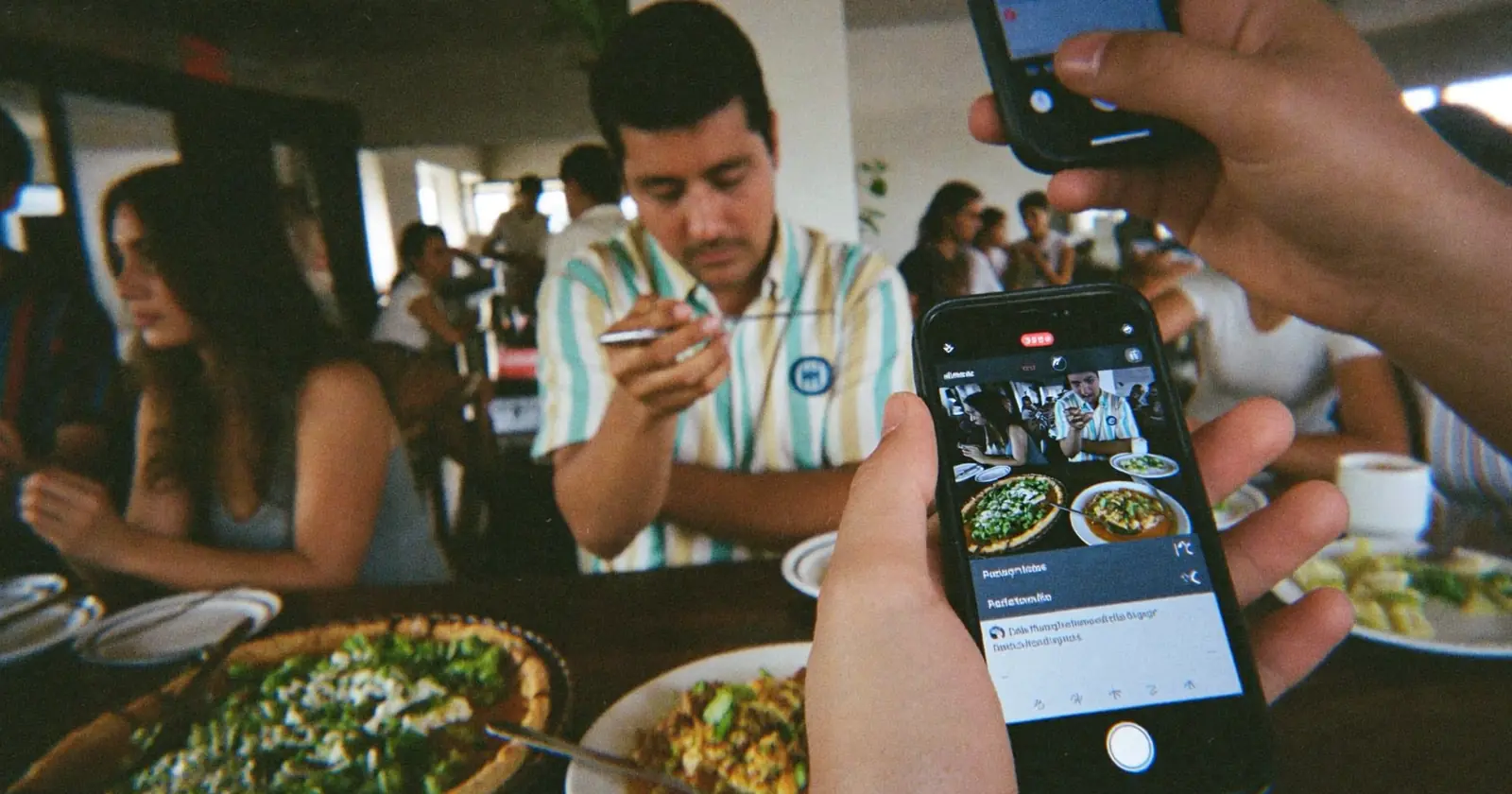
First Saturday in August at a beach bar in Tarifa. The kitchen is flat out, the terrace tables are all laid and the business phone has been buzzing on the bar since eleven. One message asks whether there are tables tonight at nine. Another, in English, asks if they have gluten-free options. A third, in French, asks if they can book for twelve. Nobody sees them until five in the afternoon, when the pace drops. By then, all three have dined somewhere else.
That is the underlying problem of tourism on this coast: demand arrives concentrated, arrives in several languages and arrives at the hour when the fewest hands are free to deal with it. And this is where artificial intelligence stops being a brochure word and becomes a concrete tool. Not to replace anyone, but to pick up the phone that nobody can pick up right now.
Why is the Cádiz coast such a particular case?
Because three things come together at once: it is seasonal, it is multilingual and it sits next to a border.
Seasonal, because business is not spread evenly across the year. A small hotel in La Línea, a holiday flat in Tarifa or a restaurant on the beach at Los Lances have quiet months and then take most of their turnover in a few weeks. And what is at stake is not small. According to the Cádiz Provincial Council's Tourism Board, with INE data, the province exceeded 11.1 million overnight stays for the first time in 2025, its best figure ever. That record is not spread out: it piles up in summer, at Easter and on long weekends. Just when business is at its tightest.
Multilingual, because this coast is not visited only by Spaniards. British people cross over from Gibraltar, French and Germans come down to kitesurf in Tarifa, along with Italians and Dutch. The customer writes in their language and expects an answer in their language. If it takes long, or if they get a makeshift English they do not quite understand, they leave.
And bordering, because the closeness of Gibraltar brings into the equation a public that books from one day to the next, compares quickly and takes it for granted that you will reply at once. Last-minute demand is a real part of the business across the area, and last minute knows nothing of reception hours.
All three point the same way: you need to serve a lot of people, in several languages and at any hour, without being able to hire ten people for three months of summer.
What can AI do when summer arrives and you can't cope?
The short answer: handle on its own everything that today goes unanswered. Let's take it in parts.
Bookings and enquiries 24/7, without a receptionist on call
Most of the messages that come in are variations on the same questions. Whether there is a table tonight. Whether the flat has parking. What time check-in is. Whether dogs are allowed. How to get there from Gibraltar airport or from San Roque station. An AI chatbot answers all of that at once, at three in the afternoon and at eleven at night, without anyone having to put down what they have in their hands.
And it does not stop at answering. It can check real availability, collect the customer's details, confirm the booking and send a reminder before the date. When an enquiry slips beyond it (a complaint, an unusual request, something that needs judgement) it alerts a person and passes on the whole conversation, without the customer noticing the switch. Human attention is kept for what really needs it.
Several languages without hiring a seasonal translator
This is the part that changes things most on this coast. An AI chatbot detects the language of the message and replies in that same language. If the customer writes in English, it answers in English. If they write in French or German, the same. Without your team having to look for the colleague who gets by in English, without delays and without misunderstandings from a translation done in a rush between dishes.
That means the tourist from Gibraltar, the German in Tarifa and the Frenchman on the beach get the same treatment as the customer from here. And you do not have to put together a multilingual staff every June only to dismantle it in September.
Check-in and arrival without a queue at the desk
In a hotel or holiday flat, a good part of the friction is at arrival. The guest comes off hours of travelling and the last thing they want is paperwork at reception. AI brings that step forward: days earlier, the customer sends their details, the documentation the law requires and their estimated arrival time by WhatsApp. When they walk through the door, the paperwork is done and all that is left is to welcome them and hand over the keys (or the lock code, if it is a flat with no physical reception).
This shows especially when several arrivals coincide on the same day, which in high season is every day. The last in the queue stops paying for the wait of those ahead. We go into it in more detail in the guide to chatbots for hotels and holiday accommodation, which covers express check-in, upselling and direct bookings in depth.
Seasonal peaks, without hiring ten people for the summer
This is the point that weighs most in the sums. August volume is not February volume, but hiring half a team extra for three months has its problems: you have to find them, train them and pay them, and by the time they can do the job well, the season is over. AI absorbs the peak without extra staff. It handles a hundred conversations at once or handles five, and the cost of handling a hundred does not shoot up like hiring ten people. The team you already have stops being glued to the phone in the middle of service and devotes itself to what cannot be automated: the dining room, the kitchen, one-to-one service.
If your business is in Tarifa or the surrounding area, we have a specific page on AI automation in Tarifa with the local approach.
Why WhatsApp and not an app or a web form?
Because your customers already have it open. There is no need to ask them to download anything, create an account or remember a password. They write to the number they already have saved and the booking is made within the same conversation.
And it is not a hunch. According to Eurostat, in 2025 94.7% of people aged 16 to 74 in Spain used instant messaging, against 82.3% on average in the European Union. It is one of the highest percentages on the continent. The channel where the customer already is is the one that does not ask them to learn anything before handing you money.
For a seasonal business this matters twice over. The last-minute tourist is not going to install your app to ask if there are tables: they write on WhatsApp, and if you do not reply quickly, they write to the place next door. Speed of reply is, very often, the only thing that decides where they dine tonight.
And restaurants and beach bars?
The same, adapted to the rhythm of the dining room. The phone that rings at eleven at night in the middle of dinner is a table that, if nobody answers, ends up in another restaurant. AI handles the booking, proposes alternatives if there is no slot at that time, notes allergies and the number of diners, sends the reminder and updates availability when someone cancels, so that table is free again for someone else.
It also sends the menu or the set menu of the day, answers the usual questions (opening hours, how to get there, whether there are vegan or gluten-free options, whether children are welcome) and, after the visit, asks for a rating and steers the customer towards leaving a Google review. In high season, asking every customer for a review or none at all is the difference between climbing the search results or staying where you are, and a waiter with a full terrace cannot compete with an automatic message. You have the detail in the guide to chatbots for restaurants and bookings.
What does AI not do, so nobody sells you a fib?
It pays to be clear about the limit, because anyone who promises it does everything is selling you smoke.
AI does not replace the experience in the dining room or the human touch. It does not handle a crisis or a serious complaint: a person always takes that on, and the system is there to alert them quickly, not to cover up the problem. It does not take complex kitchen orders in real time (that is what the till is for) nor does it know your area better than the concierge who has spent years recommending the same bar on the corner.
And there are two things that depend on your case, not on an article's promise. One, integration: a bot that answers frequently asked questions is one thing; one that checks the real availability of your hotel or dining room and writes into your booking system is another. If you already use an organised system, you start with an advantage; if bookings are in a notebook, the system has to be set up first. Two, timing: it depends on what you already have set up and what you want the system to be able to do. It is settled when we see your case, not before.
Frequently asked questions
Does it work for a business that only opens in season?
Yes, and it is precisely where it shows most. A seasonal business has the problem that its work peak and its shortage of hands fall in the same weeks. AI absorbs that peak without you having to hire and train people for three months. The rest of the year it can carry on answering enquiries and taking advance bookings for the next season, with no cost of idle staff.
Does it really serve people well in English, French or German?
Yes. The system detects the language of the message and replies in the same one, and current models comfortably cover the most common languages on this coast (Spanish, English, French, German) and quite a few more. The tourist who writes in Italian or Dutch is not left waiting either. There is no need to add languages by hand every time the profile of the visitor changes.
Is customer data handled securely?
Data is handled in line with the GDPR. In the case of check-in, the pre-registration collects the documentation required by the traveller registration law and stores it securely. The specific architecture (where each thing is stored, how it connects to your system) we define at the first meeting according to your case, without promising you in advance a clause that later does not fit.
Can it connect to the booking system I already use?
In general, yes. The chatbot can integrate with the most common booking and management systems in the sector to check availability and pass on the data. When a system has no direct connection, we work with intermediate solutions. What fits best with what you already have, we look at before starting, not as we go.
Let's talk about your case
If you have a hotel, a holiday flat, a restaurant or a beach bar on this coast and summer eats you alive on the phone, tell us. Write to us and we will say whether we can do it, how we would approach it and what it would cost. If it is not for us, we will tell you that too.

Xora IntelligenceAI consultancy and custom software in Los Barrios (Cádiz). We write about what we build for businesses in the province. If you have a question about your case, write to us.