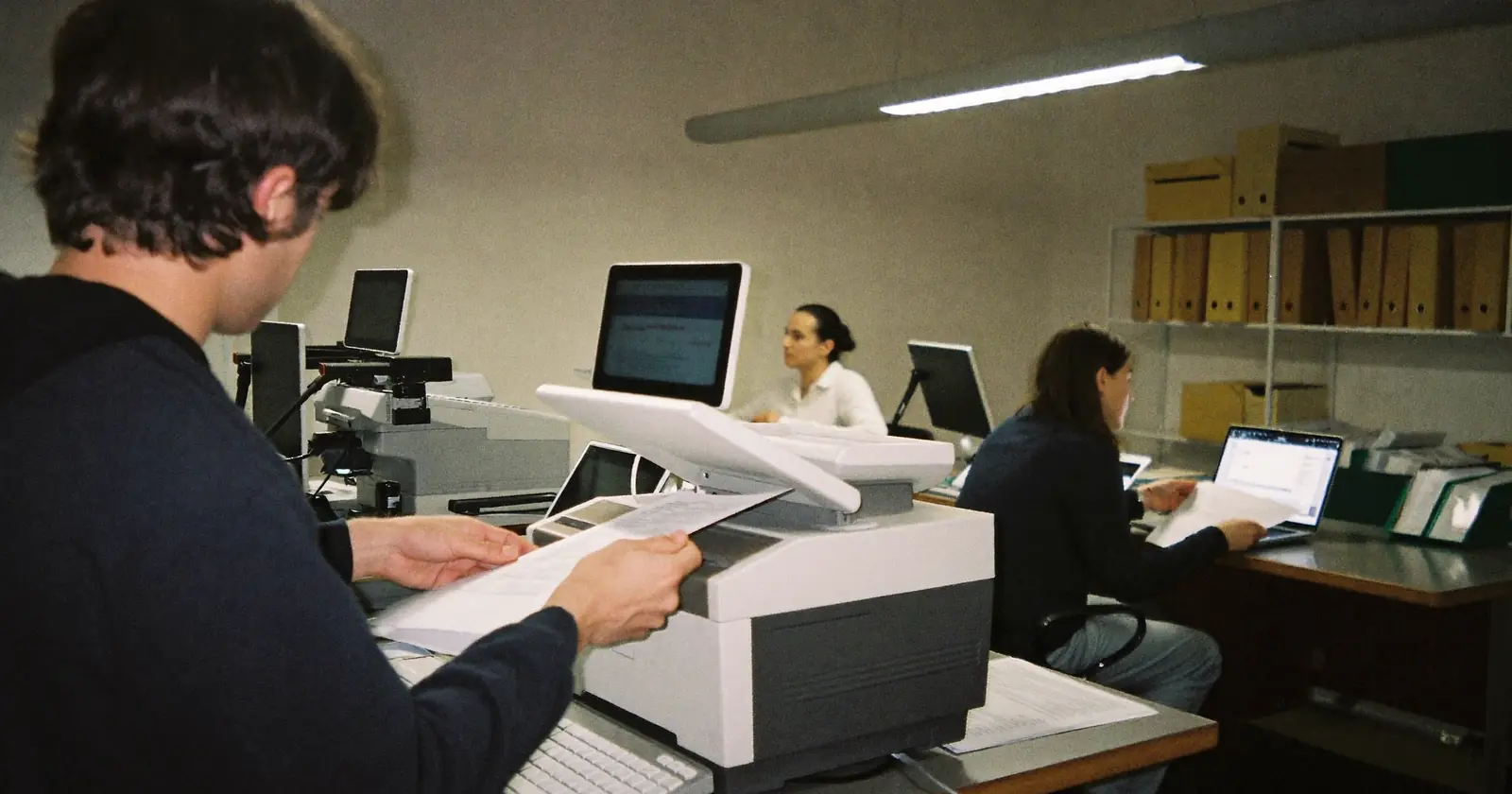
A lawyer has a time problem that is not exclusive to lawyers, but which is felt with particular intensity in law firms: every hour you spend on administrative tasks is an hour you do not bill, or bill badly. And yet those tasks are indispensable: somebody has to answer the client who asks how their file is going, somebody has to draft the fortieth draft lease, somebody has to send the reminder of the appeal deadline.
In accountancy and tax advisory firms (gestorías) the problem is identical. The adviser who handles income tax returns, quarterly taxes and self-employed registrations spends much of the day answering the same questions over and over: what documents do I need? When is the deadline? How much will it cost me? Legitimate questions, necessary for the client, but which do not require the senior adviser to answer them.
In 2026, artificial intelligence makes it possible to automate this whole layer of work reliably, securely and adapted to the Spanish legal and tax context. And it is not just for big firms: according to the INE survey on ICT use in companies, published in October 2025, 13.4% of Spanish companies with fewer than ten employees were already using artificial intelligence technologies in the first quarter of 2025, 5.9 points more than the year before. That is the size of the three-person law office and the one-person gestoría. If you want to see how this would apply to your specific sector, you can explore our AI services for businesses. And if your law firm or advisory is in the Campo de Gibraltar, this guide has a local version, with the open border and the self-employed quarter as the protagonists, in AI for law firms and advisories in Algeciras and La Línea.
The paradox of the modern law firm: you charge for your knowledge but lose hours to bureaucracy
The value of a lawyer or an adviser lies in their judgement. In knowing which clause can cause trouble in a contract, in spotting that the client's tax situation has a risk the client has not seen, in choosing the right procedural strategy. That knowledge is what the client pays for when they hire you.
But between that high-value work and the client there is an enormous layer of administration that consumes time without generating that same value: the first call to understand whether the case is for you, the welcome email with the list of documents needed, the follow-up to find out whether the client has sent the documentation, the reply to "when will you call me?", the first draft of the contract, the deadline reminder.
That layer eats a large part of the working day, and it is time that is either not billed or billed at a reduced rate.
In a large firm, that layer is delegated. In a small office there is nobody to delegate to: according to the INE Central Business Directory, on 1 January 2025, 54.4% of Spanish companies had no employees and 27.2% had one or two. Together, 81.6% ran with two employees or fewer. The person who drafts the contract is the same one who chases the outstanding documents and the same one who answers the phone.
AI does not solve the legal or tax problem. That is still yours. But it can take charge of all that intermediate layer, so that when the client reaches you, you already have all the necessary information, the file is open and the initial documentation is complete.
The 5 tasks AI automates in law firms and gestorías
Before talking about specific tools, it is useful to identify exactly which tasks are candidates for automation. Not everything can or should be automated: there is work that requires professional judgement and will always be yours. But there is a set of very well-defined tasks where AI already adds real value today.
First contact and client qualification
When someone visits your website or writes to you on WhatsApp with an enquiry, there is normally a back-and-forth before you know whether that client is for you. And the fact that the channel is WhatsApp is not a whim of the client: according to Eurostat, 94.7% of people aged 16 to 74 in Spain used instant messaging in 2025, compared with an average of 82.3% in the EU. The first-contact questions are always the same: what type of case is it? In which jurisdiction? Are there urgent deadlines? Have they already spoken to another lawyer? A chatbot can handle this initial conversation completely autonomously, gather all the relevant information and present you with the qualified case once it has what it needs.
The result is that the first contact between the professional and the potential client arrives much better prepared. The lawyer or adviser does not waste time on "so, what can you tell me?" calls: they come to that conversation already informed, which conveys professionalism and lets them get to the point from the first minute.
Generating and reviewing standard documents
Lease agreements, service contracts, basic powers of attorney, replies to standard requests, debt claim templates: there is an enormous category of documents that every firm generates repeatedly with small variations. The debt claim, for one, keeps coming up because the underlying problem keeps coming up: according to the CEPYME Late Payment Observatory for the second half of 2025, published in April 2026, the average payment period in Spain was 80.5 days on average in 2025, 34% above the 60-day maximum set by Law 3/2004 on combating late payment. While that gap is still there, that letter will go on being written. The AI can generate the complete draft from the case data, with the right clauses according to the type of contract and the applicable jurisdiction. The professional only reviews and validates, instead of starting from zero.
In gestorías, the equivalent is standard tax return forms, self-employed registrations, deferral requests, appeals against standard tax assessments. All of this can be pre-filled automatically with the data from the client's file.
Tracking files and deadlines
One of the greatest risks in a law firm is missing a procedural deadline. And at the same time, manual deadline tracking is a repetitive, low-value task. AI can maintain a system of automatic alerts that gives the right notice of each deadline: reply deadlines, appeal deadlines, contract expiries, tax filing dates, expiry of powers of attorney. The professional receives the alert and acts, but does not have to remember it manually or delegate it to a system of post-its.
Managing appointments and reminders
The diary of a law firm or gestoría can be a chaos of calls, emails and WhatsApp messages asking for appointments, confirming or cancelling. An AI system integrated with the professional's diary can offer the client the available slots in real time, manage the booking, send the confirmation and the earlier reminder, and alert the professional with the client's details and the reason for the visit. All without manual intervention.
Answering clients' frequent questions
Every law firm and gestoría has its own repertoire of questions that come up constantly: how long does an uncontested divorce take? What documents do I need for an inheritance? When is the deadline for form 130? Can I claim if I was dismissed after three months of sick leave? The chatbot can answer all these questions immediately and at any hour, without the professional having to interrupt their work every time a basic enquiry comes in.
Winning clients: how a chatbot turns enquiries into files
One of the most frequent problems in small law firms and gestorías is the loss of potential clients. Someone visits your website at 10 pm with an urgent question (a dismissal, a problem with the landlord, a notice from the tax authority) and finds no immediate answer. They call tomorrow. Or they do not call. Or they call the competitor with a contact form that promises a reply within 24 hours.
A chatbot available 24 hours changes that dynamic. The potential client comes to your website, starts typing their problem and the chatbot attends to them instantly. It does not solve the case (that is yours) but it does listen, asks the right questions to understand the matter, explains how the firm works and gathers the data the professional needs to give an informed answer first thing the next day.
The change is a fundamental one: no enquiry goes unanswered for arriving outside office hours. And the enquiries that come in at night tend to be the most urgent, and therefore the most likely to turn into a client if they get a quick response.
The chatbot can also qualify the enquiry: whether the matter is family, employment, tax or tenancy; whether there are urgent deadlines; whether the client already has legal representation. When the professional reviews the enquiries in the morning, they already know exactly what each case is about and can prioritise.
For gestorías, the chatbot can go further: it can immediately give guidance on indicative fees, tax filing deadlines or the documentation needed for routine procedures. That takes care of a good share of the "I just wanted to know how much you charge" calls and leaves the phone free for those who already intend to hire.
Document management with AI: drafts, reviews and smart templates
Document management is the heart of the work in a law firm. It is also the task that consumes the most hours inefficiently. AI is not going to draft the procedural strategy or do the legal interpretation: that is the lawyer's work. But it can take care of the most mechanical layer of document generation.
The process works like this: the professional has smart templates for the most frequent types of document. When they open a new file and enter the basic details of the client and the case, the system automatically generates a complete draft with the right clauses, the client's details already built in and updated legal references. The lawyer does not receive a template: they receive a draft already put together with the data of that case. They only need to review, adjust what is specific and validate.
In gestorías, the equivalent is the automatic pre-filling of tax forms. The system collects the client's data (income, expenses, tax situation, previous year), applies current tax rules and generates the draft of the relevant form. The adviser checks the figures, confirms that the situation has no particularities the system could not detect, and files. The tax return no longer starts on a blank sheet: it starts at the review.
Document review also improves with AI. Before the lawyer spends time reviewing a contract, the system can make a first pass and flag the clauses that deserve special attention: unusual liability clauses, the absence of clauses that should be there, legal references that have gone out of date. The lawyer does not have to read the whole contract from scratch: they have a roadmap of the points that need their professional judgement.
This kind of tool is already available for small firms, not just big ones. If you are curious about which tools are working best in 2026 for SMEs and independent professionals, in our article on AI agents for SMEs you will find a detailed analysis.
In short: AI does not replace the lawyer or the adviser. It replaces the time they lose every day answering the same emails, calling to ask for outstanding documents or drafting standard contracts. The professional concentrates on the work that justifies their fees: the analysis, the strategy and the judgement that no system can replicate.
Compliance and confidentiality: what you should know before rolling out AI in your firm
The question that always comes up in law firms and gestorías when AI is discussed is the same: what about client confidentiality? It is a completely legitimate question and it has a clear answer.
A lawyer's professional secrecy and an adviser's duty of confidentiality do not disappear when an AI tool is introduced. On the contrary: the professional remains responsible for ensuring that their clients' data is protected, whatever system they use. That is why choosing the right tool is crucial.
There are three fundamental considerations before rolling out AI in a law firm or gestoría:
- Where the data is located. Tools that process client data must comply with the GDPR (RGPD). That means the data must not leave the European Economic Area without adequate safeguards. Many enterprise AI solutions offer servers in Europe. This must be explicitly verified and documented.
- Data processing agreement. Any AI provider that handles your clients' data is a data processor under the GDPR. You need a signed DPA (Data Processing Agreement) with the provider. This is not optional: it is a legal obligation.
- What data goes into the system. Not all the data in a file has to pass through the AI tool. In many cases, the system can work with anonymised or pseudonymised data for analysis tasks, and only handle identifying data for communications with the client. The design of the workflow matters.
As for compliance with the EU AI Act (Reglamento de IA de la UE), which began phased application in 2024, the uses of AI in law firms that we describe in this article (automating communications, assisted document generation, diary management) fall into the low or minimal risk category. They do not require special conformity assessments, although it is good practice to document the use of AI in the firm and how human oversight is ensured in relevant decisions.
The key is that AI in a law firm always operates in assistance mode, not in autonomous mode for decisions that affect the client's rights. The draft is reviewed by the lawyer. The tax analysis is validated by the adviser. The AI manages the process, not the judgement.
Frequently asked questions
Is it legal to use AI to draft legal documents in Spain?
Yes, with important caveats. Using AI to generate drafts of legal documents is perfectly legal in Spain, provided that the responsible professional reviews, validates and takes responsibility for the final document. What is not permitted is submitting AI-generated documents without professional supervision, especially in court proceedings. The lawyer or adviser remains responsible for the quality and correctness of the document; the AI is an assistance tool, not a substitute for professional judgement. This applies just as with any other tool or template: responsibility lies with the professional who signs.
How is client confidentiality guaranteed when I use AI?
Confidentiality is guaranteed through three complementary measures: choosing providers that comply with the GDPR and have servers in the EEA; signing a data processing agreement (DPA) with the AI tool provider; and designing workflows to minimise exposure of identifying data when it is not strictly necessary. Many AI tools for law firms allow operation in private environments or with additional guarantees that the data is not used to train the model. It is essential to verify these conditions before rolling out any solution.
Can the chatbot give legal advice to clients?
No, and it should not be set up to. The chatbot in a law firm has a very specific role: managing communication, gathering information, answering process questions (deadlines, documents needed, how the firm works, indicative fees) and referring to the professional when the enquiry requires legal judgement. Giving specific legal advice, telling a client what to do in their particular case, is an activity reserved for registered lawyers. A chatbot that did so without supervision would not only breach professional regulation but would put the firm in a very delicate position of liability.
What about procedural deadlines: can AI manage them?
AI can help manage the tracking and alerts of procedural deadlines, but responsibility for not missing deadlines remains with the professional. The system can be set to send automatic alerts with the notice the professional defines: for example, 15 days before, 5 days before and the day before each relevant deadline. This greatly reduces the risk of oversights, but does not remove it if the professional does not act on the alerts. For the most critical deadlines, it is advisable to combine the automatic system with a periodic manual check of the deadline calendar.
What does the implementation time in a small firm depend on?
On four things, and none of them is technical. First: the scope. A chatbot that answers frequent questions and manages appointments goes live much sooner than full document automation. Second: how many types of document you want to cover with smart templates, and how similar they are to each other: ten contract templates with the same structure do not take the same work as ten different documents. Third: the state of your information. If the files are already in an orderly system, it connects; if they are scattered across folders, emails and an Excel, they have to be organised first. Fourth: the supervised trial period you want before signing the system off, which in a law firm is best not shortened.
That is why we do not give a fixed timeline without seeing the firm. What you can do is estimate it yourself: count how many processes you want to automate and what state the data for each one is in. Those two numbers explain almost the whole calendar. What is not needed is for the team to have technical knowledge.

Xora IntelligenceAI consultancy and custom software in Los Barrios (Cádiz). We write about what we build for businesses in the province. If you have a question about your case, write to us.